It’s Saturday, this must be Armenia
Wednesday, September 3, 2008
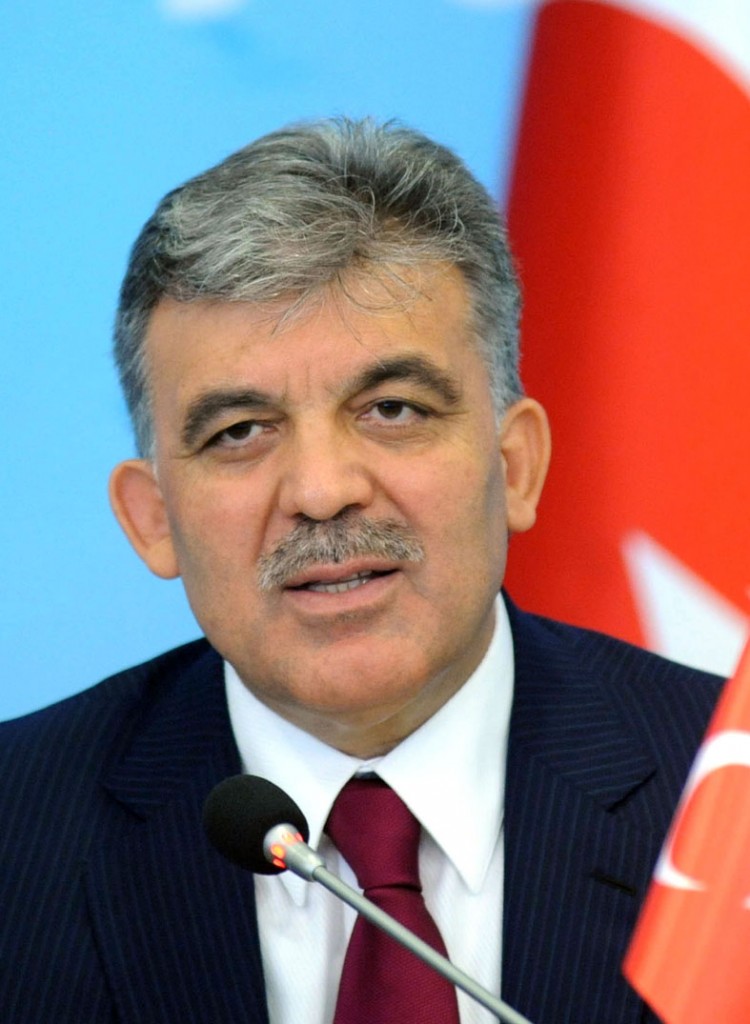
After years of diplomatic distance, Turkish President Abdullah Gül is set to head to Armenia to watch the football match between the two countries with his Armenian counterpart. Turkey hopes the trip will help thaw relations as well as strengthen its regional agenda, despite domestic accusations of a sell-out
FULYA ÖZERKAN
ANKARA – Turkish Daily News
After weeks of puzzling over a rare, “low-profile” visit to Armenia, it is almost certain President Abdullah Gül will break a political taboo and honor his counterpart’s invitation to attend the Turk-Armenian football match this weekend.
But Turkish officials have refrained from revealing the final decision until the last moment.
Ahead of the president’s trip, a group of Turkish diplomats, headed by the deputy undersecretary of the Foreign Ministry, Ünal Çeviköz, was scheduled to depart for Yerevan Wednesday morning. The Turkish delegation is expected to sound out Armenia’s approach to the Turkish proposal for a new regional cooperation mechanism as well as laying the groundwork for the two president’s landmark meeting on the sidelines of the match, amid security fears and strong reactions from the Armenian nationalists — the Tashnaks.
Turkish opposition parties were up in arms, making their voices heard as soon as the trip’s plans leaked out. Republican People’s Party, or CHP, leader Deniz Baykal claimed that Turkey’s true friend was Baku, not Yerevan, while Nationalist Movement Party, or MHP, leader Devlet Bahçeli argued such a high-level visit would be tantamount to a historic mistake. In order not to let the opposition to use the trip as leverage to mount criticism of the government, lawmakers from the ruling party canceled plans to accompany the president to the match. The ruling Justice and Development Party, or AKP, parliamentary group yesterday issued a written statement announcing their decision not to send any deputies to the football match in Yerevan.
The visit alone is enough to raise eyebrows in Azerbaijan, Turkey’s closest regional ally, which is formally at war with Yerevan over the Nagorno-Karabakh dispute.
While speaking in front of cameras last week, Azerbaijan’s visiting foreign minister refrained from a public criticism of the trip and only said that the decision would be made by the Turkish president. Away from the cameras Azerbaijanis have not officially communicated uneasiness over future steps toward a thaw in the Ankara-Yerevan axis, but they were advised by Turkish officials to look into the matter “broadly and in the long run,” according to diplomatic sources.
Azerbaijan keeps nervous eye
Azerbaijani diplomatic sources are rather cautious on the other hand and refuse to interfere in what they say are, “Turkey’s domestic affairs,” but believe that their Turkish kinsmen would not do anything that could hurt Azerbaijan.
“We believe Turkey will always side with us since we are two-states-one-nation with our Turkish brothers,” Hasan Sultanoğlu Zeynelov, consul general of Azerbaijan in the eastern Anatolian province of Kars, told the Turkish Daily News. “We cannot imagine otherwise.”
Azerbaijanis believe the normalization of Turk-Armenian ties are not possible without a solution to a series of problems, including the dispute over Nagorno-Karabakh, Armenian territorial claims from Turkey and the diaspora’s attempts for international recognition of the alleged genocide at the hands of the Ottoman Empire.
Turkey recognizes Armenia as an independent state but never established diplomatic relations and closed the border with that country in 1993 after Armenian troops invaded Nagorno-Karabakh, an Azeri territory.
“We are not sure if Turkey’s fair demands have received a positive response from Armenia; we are also in favor of peace but our territory is under occupation,” stressed Zeynelov.
Fazıl Abbasov, owner and editor-in-chief for Azernews newspaper, said Turkey wished for normal ties with Armenia in good faith but he did not believe Armenians truly wanted peace. “Armenians are trying to rebuild an image to show the international arena that they are in favor of peace,” he asserted.
Caucasus conflict gives peace a chance
Besides the secret negotiations between Turkish and Armenian diplomats in third party countries, the latest Caucasus crisis appears to give Turk-Armenian peace a chance, especially after Ankara’s efforts to communicate its idea to establish a Caucasus platform with Yerevan.
The platform for stability and co-operation in the region will involve Turkey, Russia, Georgia, Azerbaijan as well as Armenia but bilateral conflicts have made the project infeasible even before it is born. While recognizing Armenia as an independent state, Turkey does not have formal diplomatic relations with the country.
“We’ll not get into the same bed with the Armenians. We are still in contact (over the Caucasus plan),” said a Turkish diplomat.
Ankara says the outbreak of the Georgian-Russian war last month dealt a serious blow to regional balances and believes the Caucasus platform could be a remedy in the long run to defuse further crises facing the region in the newly shaping world order.
Turkish Daily News |



 Akgün Medya